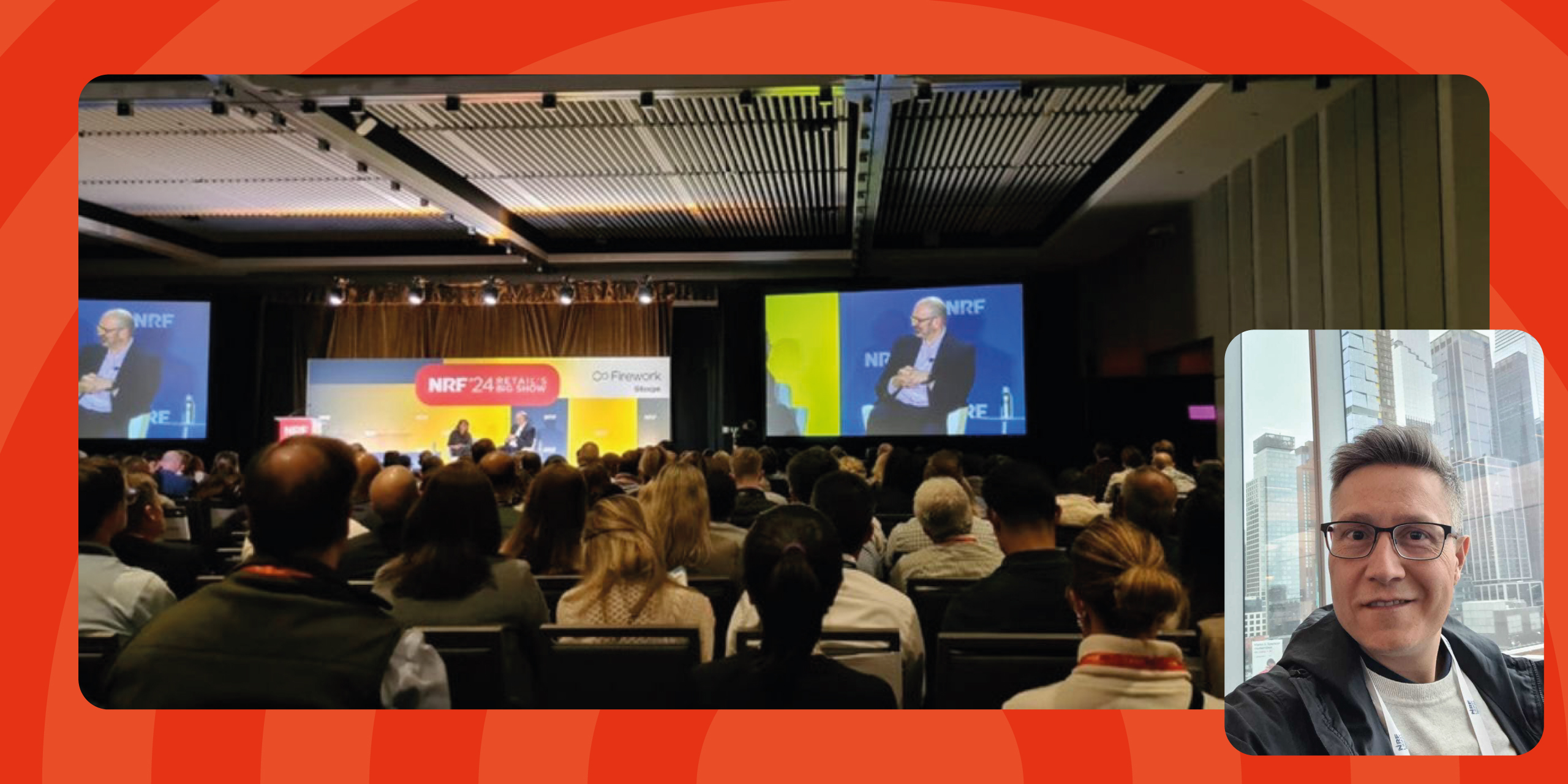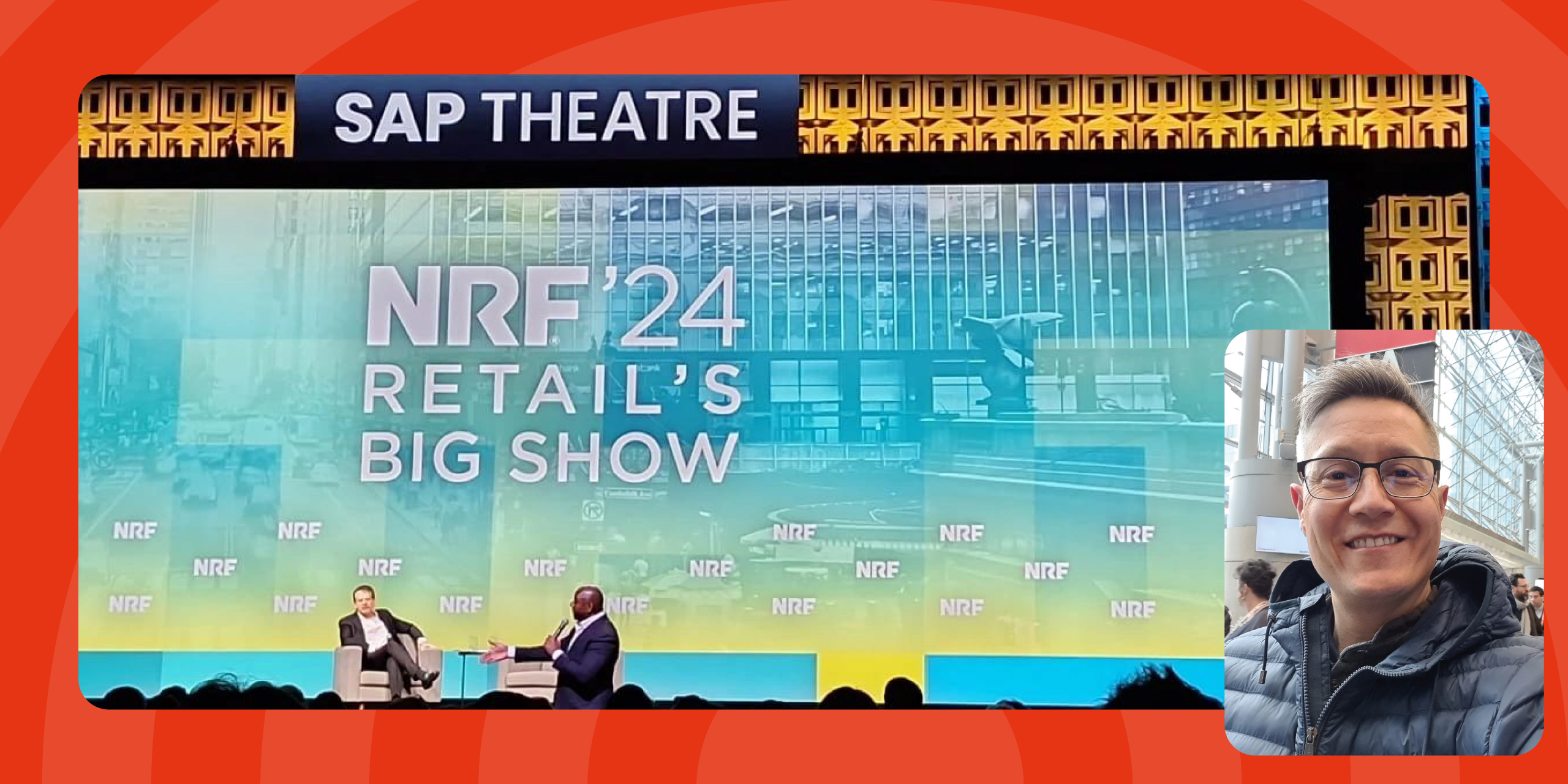


The first edition of People Tech Day 2024 took place in partnership with the Women in Retail Institute and included an agenda dedicated to the NRF, the largest global retail and consumer event. The meeting brought together more than 140 guests and consolidated practical learning presented in panels and lectures with Brazilian specialists in the sector.
The following are the main highlights organized by theme and with direct implications for strategy, operation, and store experience.
Ecosystem construction and the concept of “third place” in retail
Lecture: Building ecosystems, with Julio Takano (CEO of KT Business Architecture)
The lecture presented the concept of community as an operational and commercial asset, using the logic of “Retail Lovers” to explain how in-person experiences can generate recurrence, loyalty, and differentiation.
What is “third place” and why does it matter
The “third place” is an environment that ranks third in the consumer's routine, after home and work. In retail, this space tends to be a point of sale designed for coexistence, convenience and experience, with integration between physical and digital.
For strategy, the concept is useful as a design criterion: when the store provides a reason for visiting in addition to the purchase, it increases the length of stay, frequency, and propensity to try services.
What characterizes a smart store in practice
The presentation listed recurring components in connected and omnichannel store models. These elements act as a maturity checklist, prioritized by journey and category.
Examples of capabilities cited:
- Integration of ERP + CRM + App
- Mobile checkout
- Smart fitting room
- Click & Collect
- Drive-thru
- Service and relationship via WhatsApp Business
- Digital Signage (digital signage)
- Standalone store
Collaboration as an ecosystem architecture
The central point was the role of collaboration between industry, distribution, and retail to enable consistent experiences. This design transforms the store into a service distribution channel, reducing friction in the journey and expanding revenue opportunities beyond the product.
Recommended applicability
The lecture provided a useful operational combination for short and medium term projects:
- design “microexperiences” linked to real public interests (e.g., entertainment, convenience, product discovery);
- structure a digital operation with minimal integrations (CRM + history + customer identification);
- select 1 to 3 omnichannel capabilities per cycle (e.g., click & collect + WhatsApp + mobile checkout) to avoid complexity without adoption.
Efficiency and effectiveness: omnichannel and the new role of the physical store
Panel: Efficiency and Effectiveness in business, with Marina Canto (Product Director of Vivara), Monique Pizetti (CEO of Super Moniari) and Maria Teresa Cristina Zanon (Executive Director of Ibevar)
The panel connected issues from NRF 2024 with enforcement decisions, highlighting omnichannel as a discipline that is constantly being updated, and not as a “closed” project.
Physical store as an environment for experimentation and connection
The most emphasized point was the role of the physical store as a space for sensory experimentation and relationship. This function creates differentiation when e-commerce already delivers logistical efficiency and price comparability.
In practice, the store tends to gain relevance when:
- reduces consumer insecurity through proof, demonstration, and guidance;
- creates brand consistency with sensory stimuli and narrative;
- enables complementary services (withdrawal, simplified exchanges, consulting, customization).
Site as an informational and complementary layer
The panel reinforced the role of digital as a complete information layer, capable of clearly supporting decisions. In categories where comparison is intense, better information reduces abandonment and increases conversion rates, even when the final purchase takes place in the physical store.
Operational implication: content and product data must be aligned with service and with what happens in the store, because inconsistency increases support costs and reduces trust.
Insights from NRF 2024: circular economy, empathetic AI, and more human physical experiences
Lecture: Making it count: insights from NRF 2024, with Jorge Inafuco (LeadersLab/FIA) and Anelise Campoi (Acampoi Architecture and Consultoria/ESPM/IEDI)
The lecture organized trends in response to a macro transition: leaving a logic of abundance into a cycle of reconstruction, transformation, and regeneration. The content was presented as a direction for business design and experience, with implications for portfolio, services, and internal culture.
Three outstanding trends for 2024
1) Circular economy with the consumer as the guardian of the product
Circularity was placed as a value strategy, in which the customer participates in the product cycle. This tends to impact categories with frequent repurchase and disposal, in addition to opening space for re-sale, maintenance, reuse, and loyalty programs linked to the life cycle.
2) Empathic AI: less “script” and more companionship and mentoring
The emphasis was on more natural conversational experiences, with real utility for the consumer and the employee. For operation, this requires governance, flow design, and quality criteria, because the objective is to reduce friction and expand resolution.
3) Reality check: emotional breadth in the physical experiences of the POS
The lecture treated the store as an environment capable of generating measurable emotional impact, influencing brand memory and propensity to recommend. Implication: experience must be designed as a system, not as an “isolated action”.
AI as a medium also applied to the team, not just to the consumer
A relevant operational point was the use of AI to improve internal routines, engagement, and cultural adherence, with governance and accessibility. When a company measures employee satisfaction and friction, it reduces turnover and improves service consistency, which impacts customer experience.
Six fronts to increase the relevance of the physical point
The lecture consolidated six dimensions used as a prioritization map for the evolution of physical retail:
- Values
- Products and experiences
- manoeuvres
- talents
- Business models
- Purpose
These fronts work well as a diagnostic framework: each store project can be evaluated by impact on operation, experience, culture, and feedback.
(practical checklist)
Practical checklist: how to turn insights into an action plan
To close the content with applicability, follow a short implementation itinerary in cycles:
- Choose 1 main objective per quarter (ex.: increase in-store conversion, increase in-store pickup, reduce service time).
- Select an omnichannel capability to unlock the objective (ex.: click & collect, WhatsApp, mobile checkout).
- Define operational and experience metrics (e.g., queue time, resolution rate, NPS per channel, withdrawal adoption).
- Integrate CRM and service history as a minimum requirement, to avoid disconnected experiences.
- Create an AI governance standard (scope, knowledge base, quality criteria, auditing and updating).
- Include the collaborator's journey in the drawing, because execution depends on training, usability, and adherence.
Upcoming content and related solutions
Follow the coverage of other Plusoft events on the blog. For customer loyalty and monetization initiatives with AI and automation, prioritize solutions that unify service history, customer data, and omnichannel execution at scale, with governance and security.
Frequently Asked Questions (FAQ)
What was NRF 2024?
NRF 2024 is one of the main global retail and consumer events, with lectures and cases on trends, technology, operations, experience, and business models.
What is a digital store?
Digital store is the operation that integrates physical store and digital channels into a continuous journey, with customer identification, unified history, and omnichannel services, such as pickup and service through digital channels.
What does “third place” mean in retail?
It is a point of sale designed to be a recurring space in the customer's routine beyond home and work, offering convenience, conviviality and experience, supported by digital capabilities.
What trends did NRF 2024 reinforce for retail?
Circular economy, AI applied to experience and operation, and physical experiences with a greater human and emotional component, in addition to a focus on talent, operation, and purpose.