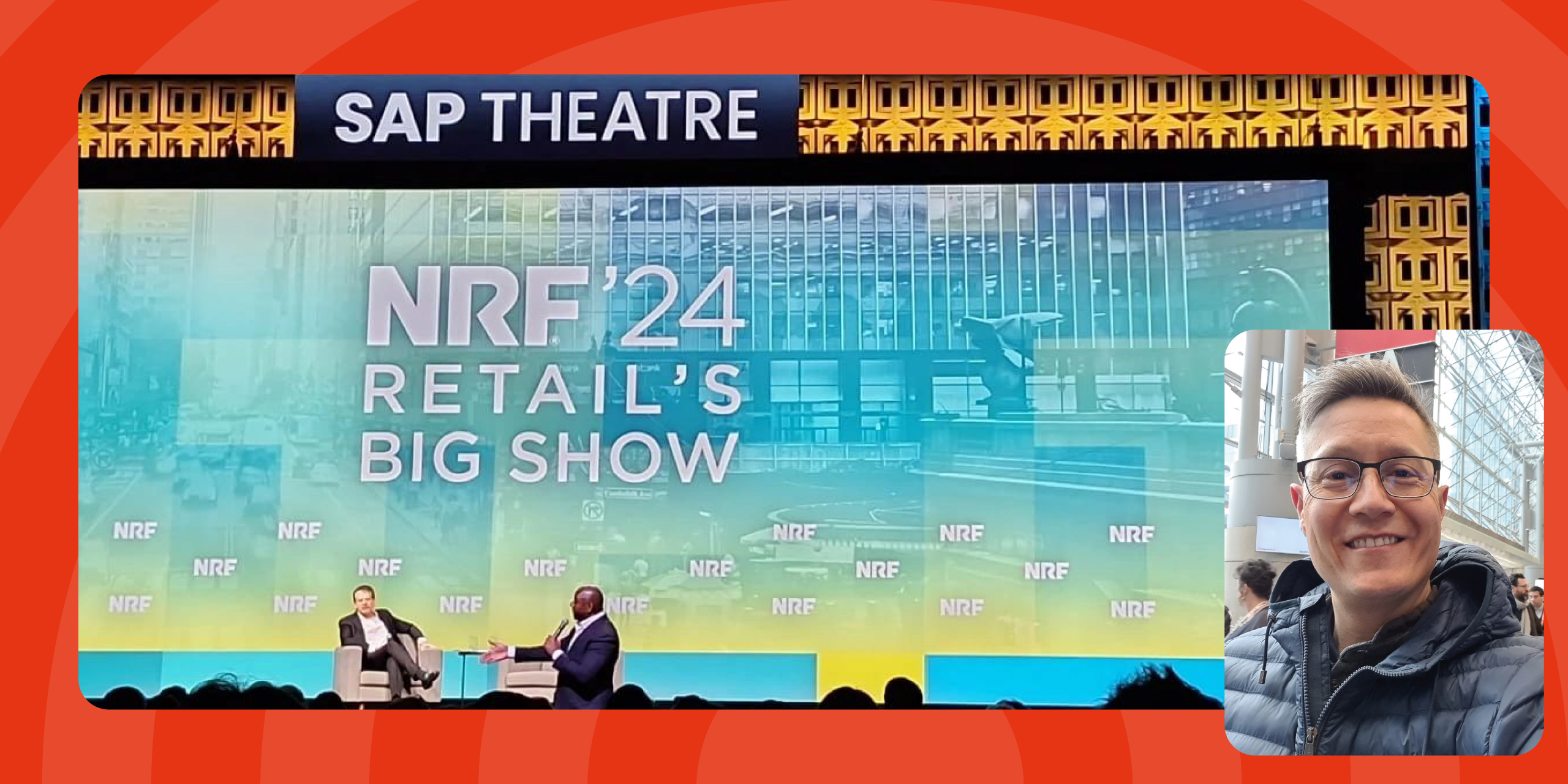
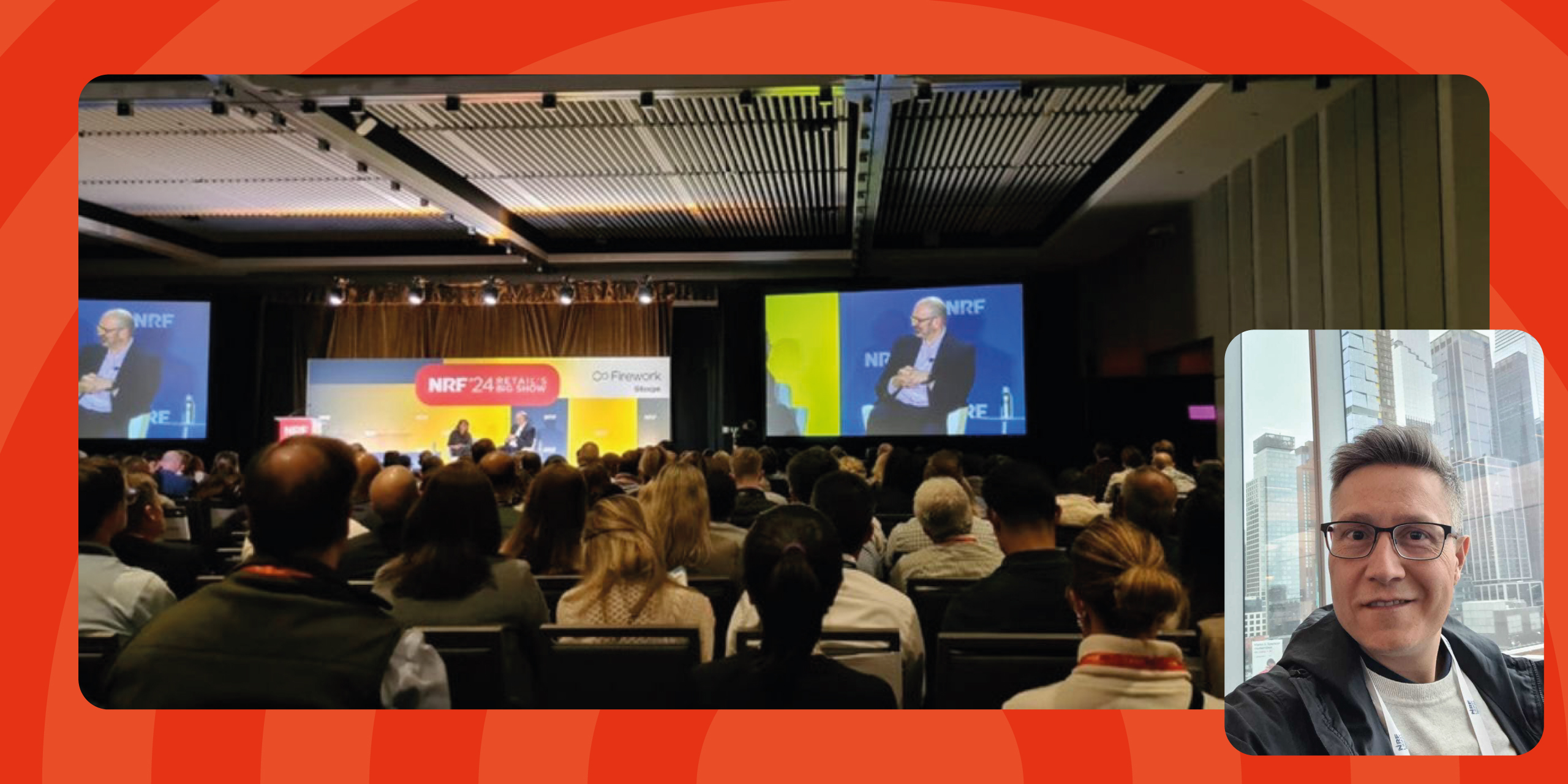


Plusoft was present at the NRF Big Show 2024 in New York, the leading global retail event. In this content, the focus is on food retail, focusing on supermarkets and what appeared most strongly in CRM, market and consumption, technology, supply chain, and operations. On practically every topic, Artificial Intelligence and Data Analytics were treated as levers for differentiation, monetization, and loyalty.
Why food retail was featured in NRF 2024
The NRF Big Show brings together tens of thousands of professionals and companies from the retail ecosystem, including supermarkets, drugstores, wholesalers, independent retailers, and technology providers. On the first day, the session “North American Grocery Retail Trends in 2024” It was one of the most contested points, with the participation of The Kroger Co. And from Forrester Research.
The conversation connected market research with practical cases of operation, which helped to separate trends with immediate application from more experimental initiatives.
Key trends for supermarkets and food retail
1) Consumer more sensitive to price and more open to switching between brands and retailers
In the session, the expansion of the search for offers in different players was evident. For the retailer, this has direct implications for retention strategies And in repurchase incentive mechanisms.
Practical applications:
- Price elasticity segmentation rules (by category and by purchase mission).
- Behavior-based loyalty benefits (frequency, basket, recurrence), avoiding generalized discounts.
- Measurement of “flag exchange” (share of wallet) to calibrate investment in CRM.
2) Convenience as a choice criterion, with a more pragmatic omnichannel
Convenience appeared as a decision variable in formats that go beyond e-commerce. The flexibility of delivery and pick-up was cited as part of the value package.
Formats with greater operational relevance:
- Pick-up at the store (with picking management and delivery window).
- Scheduled delivery (logistics optimization and demand predictability).
- Immediate delivery (integration with last mile and rupture control).
Implication for decision: the “best channel” depends on margin per order, cost of service, and audience adherence, so the omnichannel roadmap requires metrics by region and customer profile.
3) Data-based personalization, with execution at the right point in the journey
The desire for more personalized experiences was pointed to physical and digital stores. The critical point is to consistently transform data into action, without relying on manual campaigns.
Use cases with measurable impact:
- Recommendations by purchase mission (supply, convenience, replacement, occasions).
- Offers tailored to buying propensity and price sensitivity.
- Orchestration of messages by channel (push, email, WhatsApp and onsite), respecting frequency and preference.
How Plusoft addresses this scenario: solutions such as MKT Suite support hyperpersonalization and campaign automation strategies based on data and journey rules.
4) AI applied to service and operational automation, focusing on efficiency
AI was highlighted in personalized recommendations, chatbots for customer service, and automation of operational tasks. The topic was presented as a way to reduce friction and increase productivity in repetitive processes.
Examples of applications that tend to have faster ROI:
- Assistants for recurring questions (order status, exchange policy, schedule, availability).
- Automation of screening and categorization of requests (reduction of service time).
- Support for stores and internal teams with knowledge base and standardized answers.
5) Generative AI in marketing and creation, with governance as a requirement
Mentions of Generative AI appeared in contexts of content production and personalization at scale: marketing texts, static images, creative variations, and campaign supports.
Criteria for decision before climbing:
- Definition of brand “guardrails” (tone, prohibited terms, sensitive claims).
- Approval flows and audit trail (who generated it, who approved it, where it was published).
- Connection with product and inventory data to reduce inconsistencies.
6) Data engineering before more advanced models
A reinforced point was the need to invest in data engineering to increase efficiency in the collection, treatment, and availability of information. Without this layer, advanced analysis and modeling are limited.
Minimum base checklist:
- Unified customer identity (cross-channel identity resolution).
- Stable taxonomy of products and categories.
- Instrumented journey events (navigation, cart, shopping, post-purchase).
- Data quality and latency defined by SLA.
7) Self-checkout still depends on experience and audience profile
Self-checkout was discussed, with the caveat that part of the food retail sector is still looking for formats that consistently deliver perceived value. Acceptance varies depending on desired experience, convenience, and level of customer engagement.
Implications for the operation:
- A/B tests by store and time, tracking queues, losses, and satisfaction.
- Training and clear employee role (assistance, loss prevention, guidance).
- Assortment review and cash front flow.
8) Employee experience as an operational performance factor
Improving the employee experience appeared as a way to reduce operational burden and increase execution consistency, using automation, chatbots, and intelligent systems.
Practical actions with a short-term impact:
- Internal assistants for procedures (standardization and reduction of rework).
- Automation of repetitive administrative tasks.
- Operational panels with priorities for the day (disruption, replacement, orders, withdrawal SLA).
9) Precision Marketing and Retail Media as a Monetization Agenda
The theme of Precision Marketing and Retail Media was treated as a direct monetization opportunity, combining media inventory and purchase data for segmentation.
Implementation points:
- Definition of the format portfolio (onsite, offsite, CRM, in-store).
- Segmentation and measurement rules (incrementality, attribution, frequency control).
- Commercial governance with brands and industry (SLA, reports, standard metrics).
What to prioritize in a supermarket's action plan in 2024—2025
- Structure customer database and journey with quality and governance.
- Implement actionable personalization in higher-impact channels (app, website, CRM).
- Automate service and processes with AI where there is volume and repetition.
- Validate self-checkout with operational metrics and experience design by store.
- Build Retail Media with a clear value proposition and standardized metrics.