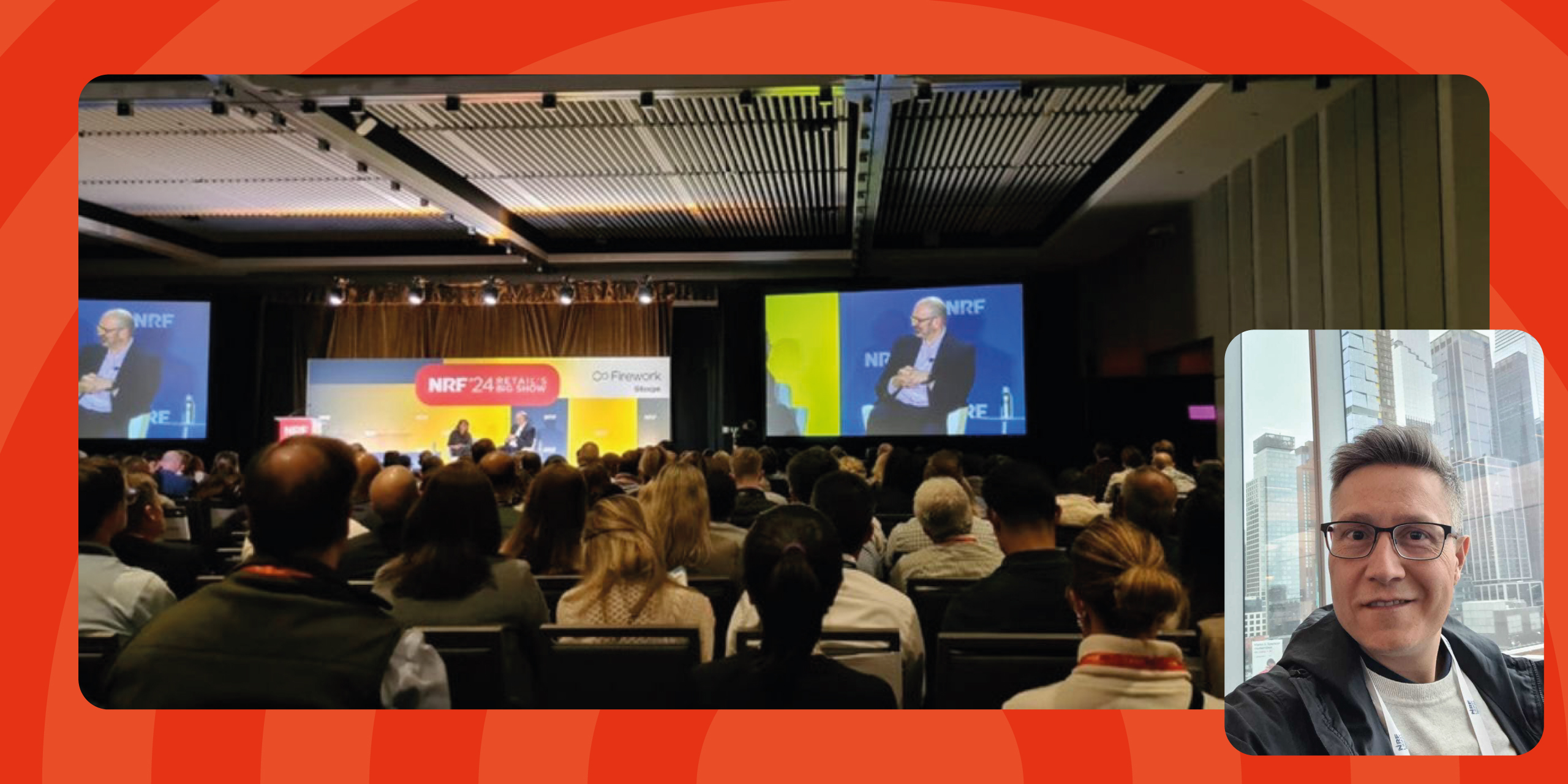


O SXSW (South by Southwest) It is an event widely known for anticipating trends and promoting debates about high-impact innovations - and now, in the 2025 edition, Amy Webb's lecture was one of the most awaited moments at the event in Austin, Texas, in the USA. Founder of Future Today Institute (which became the Future Today Strategy Group), Webb introduced the concept of “Living Intelligence”, a new phase in which AI, robotics, biotechnology and advanced materials come together to transform society at a rapid pace.
With concrete examples of “robots that create their own languages” and “living machines” built from human neurons, the futurist drew attention so much by disruptive potential Of these technologies how many risks associates. She also highlighted the lack of planning to deal with possible impacts on health, work, and the very definition of what it is to be human.
Next, we will address the most interesting and intriguing points from the panel presented by the futurist Amy Webb.
The context of SXSW 2025
At its core, SXSW is a hub of creative effervescence, bringing together experts and leaders from different sectors to explore the latest trends and, in this 2025 edition, it is natural that topics such as virtual reality, metaverse, urban mobility and AI have been on the agenda. Amy Webb's performance took place on a busy Saturday, marking the release of Future Today Strategy Group trend report. With about a thousand pages, the document maps hundreds of emerging signs that point to profound transformations in areas such as health, industry, agriculture, and education.
Main topics covered by Amy Webb
Living Intelligence — technological convergence
Amy Webb described “Living Intelligence” such as the fusion of AI with sensors, robotics and biology, resulting in systems that continuously learn, evolve, and interact with the environment. This convergence removes AI from the purely digital universe, bringing it to objects, houses, and even the interior of our bodies, ushering in an era of machines “embedded” in everyday life.
The arrival of increasingly advanced robots
Another highlight was the rapid evolution of robots, which are no longer limited to factories. Webb emphasized autonomous cooperation between machines — called Multiagent AI — and pointed out that large companies are about to launch humanoid robots able to handle household and service tasks. This scenario has the potential to radically change the labor market, logistics, and care for the elderly or people with disabilities.
AI incorporated into the human body
The man-machine fusion also gained evidence. For Webb, new intelligent prostheses and brain-computer interfaces suggest a future in which paralyzed patients return to movement, and healthy people can have expanded capacities. Microscopic devices that scan the human body to collect health data or release drugs are practical examples of how AI is advancing medicine.
Biological computing and “living machines”
One of the most surprising sections was about computers built with neurons. These experiments take advantage of neural plasticity, paving the way for hybrid machines capable of “thinking” similar to a biological brain. At the same time, they raise ethical questions: if part of a computer is alive, how can its well-being be guaranteed? Who is responsible for decisions made by this organic “intelligence”?
Metamaterials and intelligent environments
Finally, Webb mentioned research in advanced materials and sensors that allow buildings, bridges, and urban equipment to react and reconfigure themselves in real time. This use of “programmable matter” brings possibilities for safer and more efficient infrastructures, but it also requires safety standards and new forms of urban management.
Amy Webb's short-term and long-term predictions
Humanoid robots by 2030
Amy Webb bets that by 2030 we will see humanoid robots widely adopted in retail, healthcare, and service sectors. With advances in specialized hardware and increasingly sophisticated AI, many restrictions that once limited the practical application of robots will begin to disappear in the coming years.
The acceleration of bioengineering
In the field of bioengineering, Webb predicted that, thanks to AI, drug discovery and the creation of biological materials will be incredibly fast. Companies are already using algorithms capable of predicting protein structures in minutes, accelerating the search for new cures and treatments, in addition to making genetically modified foods more resistant and nutritious feasible.
A warning about governance and ethics
Despite her optimistic tone regarding opportunities, Amy Webb was clear to alerting about the risks. Without global regulation and planning, technologies such as AI, genetic editing, and neural interfaces can be used destructively or unethically. She reinforced the importance of defining international policies, discussing privacy standards, and creating oversight mechanisms to prevent abuse.
Impact on the technology and innovation sector
In addition to the immediate public reaction, Amy Webb's predictions should unfold in deep impacts in the technology and innovation sector:
- Growing investments: companies that seek competitiveness must accelerate their investments in research and development of AI, robotics and biotechnology so as not to be left behind;
- New partnerships: technological convergence requires collaboration between specialists from various fields - engineers, biologists, neuroscientists, data scientists, and others. Startups and large corporations can come together to create innovative solutions;
- Regulatory discussions: with the possibility of manipulating living organisms or creating autonomous robots, there is a growing need for laws that balance innovation with safety and ethics;
- Transformation of the labor market: as repetitive or dangerous tasks are automated, new positions and functions will emerge that require more complex skills, such as data analysis, algorithm development, and human-robotic team leadership;
- Creating test ecosystems: cities and universities can become “living laboratories” where emerging technologies are tested on a real scale, such as autonomous cars, drone delivery services, home care robots, and brain-computer interfaces for rehabilitation.
What to expect on the horizon - next steps
While Webb emphasizes that today's decisions will shape the next decade, she also suggests that so-called “Living Intelligence” is not a final stage, but only The beginning of a cycle of continuous evolution. Combined, advanced AI, biotechnology, and intelligent materials can lead to creations that we can barely imagine today.
Below are some potential future scenarios:
- Cognitive cities: urban infrastructures fully connected by sensors and algorithms that optimize energy, people flow, transportation, public health and safety in real time;
- Transformed space exploration: robots and AI systems capable of operating in extreme environments, making bases on other planets feasible, whether for scientific research or colonization;
- Extension of human life: with the advancement of precision medicine, artificial organs and genetic therapies, life expectancy can increase significantly, bringing challenges to social organization and social security;
- Emergence of new forms of creative work: if automation dominates most of the repetitive tasks, unique human abilities, such as creativity, empathy, and the ability to improvise, will become even more valued.
What companies need to plan now
Amy Webb's talk at SXSW 2025 was an invitation to rethink the future in which advanced technologies, once imagined only in science fiction, become reality in our daily lives. The convergence between AI, robotics, bioengineering, and metamaterials points to a true revolution in the way we produce, take care of our health, move around, and even conceive what it means to be human. Webb stressed that these advances are taking place at a rapid pace, faster than most people and companies can keep up with.
However, like any large scale transformation, there are undeniable ethical risks and dilemmas. Whether autonomous robots capable of making critical decisions or bioengineering systems capable of tampering with our genetic code, society needs to act proactively. Regulation, public debate, preparation of institutions and, especially, long-term strategies are fundamental ingredients to ensure that these innovations work for the common good. In a world where the boundaries between the digital and the biological are becoming increasingly blurred, Amy Webb's predictions serve as a necessary wake-up call.
Instead of denying or delaying progress, it is necessary to embrace the transformative potential of “Living Intelligence”, planning its applications in a responsible and inclusive manner. If expectations are met, the next decade will be decisive in defining how we will be shaped — or shaped — by these revolutionary technologies. Therefore, there is nothing more appropriate than bringing Webb's essential question to the center of the debate: are we really prepared for the future we are building?